Fall Session
Fall 2026 Courses & Lectures
August 24-November 19
Registration is open! Click the button below to get started, and scroll for more details.
FAB's Fall Session offers courses, lectures, tours, and activity classes. Click HERE to learn about our tours and activity classes. Keep scrolling to learn about our Fall Session courses, lectures & pricing!
4-Week Courses are $40 each. 3-Week Courses are $30 each. Lectures are $12 each. You can purchase courses and lectures individually or choose one of our flexible bundle options:
- Choose any 3 lectures for $26
- Choose any 3 courses for $86
- Bundle the entire fall session (8 courses & 6 lectures) for $248
*Note: "The Wonderful World of Ice Cream" lecture with Andy Binsley has an extra $5 charge for in-person attendees for the ice cream samples.
Course and Lecture Format
Courses and lectures can be attended virtually on Zoom and meet for 2 hours once per week. Students will use the chat function in Zoom to submit questions. All courses and lectures are recorded and available for students to watch (instructions on viewing recordings are sent out each week). If you'd like to sign up and view a recording after the lecture has taken place, reach out to us at fab@CalLutheran.edu.
Several courses and lectures can also be attended in-person. They will be offered at the Thousand Oaks campus. Parking is always free and is accessible. Click the drop-down below for more details about attending in person.
Our FAB students’ safety is important to us; therefore, we are taking precautions to make the in-person classes a safe and welcoming environment. In this environment, students will be able to enjoy face-to-face interactions with their faculty and classmates and the option to grab a coffee or a bite to eat before or after class. For those not able to join us in person, we continue to be your virtual home for learning!
Note: Walk-ins are only permitted if there is space and payment (cash or check) is brought to the first class meeting or lecture You may call 805-493-3290 in advance in inquire. Walk-ins will not be allowed into the learning space if they do not pay in-person.
Regarding in-person attendance:
- FREE, accessible parking (view location and parking details HERE)
- Large lecture room with ample space meeting Cal/OSHA guidelines
- Please do not attend in-person if you are ill (attend virtually instead)
- We are a mask-friendly program
Can’t get to campus for an in-person course? No problem! Attend the course virtually instead.
HyFlex Learning
Using the HyFlex learning model, in-person and virtual students can attend the same class simultaneously. A special “360-camera” will follow the instructor in the classroom, and students attending virtually will be able to see and hear the instructor and view the PowerPoint over Zoom (similar to our traditional virtual courses).
We look forward to continued learning with those near and far! Keep reading to learn more about our captivating Fall Session courses and lectures.
View YouTube previews of some of the Fall Session by clicking the button below:
Fall Session Courses
Wednesdays, 1:30-3:30pm (Pacific)
Meeting Dates: September 2, 9, 16, & 23
Online via Zoom
Course Description:
On the night of December 16, 1916, a group of conspirators murdered Grigori Rasputin,
Russia’s “Mad Monk”. While meant to strengthen the Romanov dynasty, merely two months
later this murder brought on their downfall and ushered in a year of two revolutions
that ended with the Bolshevik takeover of Russia and the eventual murder of the Tsar
and his family. In many ways, Russia and the rest of the world are still dealing with
the consequences of that murder.
Most narratives in books, films and even songs about the murder of Rasputin focus on the victim, whereas this course will shed new light on the perpetrators of the crime. Who were these men who assembled on that fateful night in the Yusupov Palace in Saint Petersburg and what motivated them to commit that heinous crime? What did the rich debonair Feliks Yusupov have in common with the goggle-eyed, middle-class Englishman Oswald Rayner? What brought the Tsar’s cousin Dmitry Pavlovich and the Duma deputy Vladimir Purishkevich to join the conspirators? Who provided the cyanide to be used in the murder and who shot the fatal shot? And how did these men’s lives enfold after the murder of Rasputin? Our story will take us not only to the magnificent Yusupov Palace in Saint Petersburg, but also to the Yusupovs’ estates outside of Moscow and in Crimea, as well as to Oxford, Malta and Paris.
Click here to view a preview of this course
Bio:
Dr. Asya Pereltsvaig received a degree in English and History from the Hebrew University of Jerusalem
and a PhD in Linguistics from McGill University. She taught at Yale, Cornell, and
Stanford universities, and has been teaching in lifelong education programs since
2010. Her expertise is in language, culture, and history, and the relationship between
them. Asya has published five scholarly books with Cambridge University Press. Asya
is a popular instructor for several lifelong learning institutes around the country.
Wednesdays, 10am-12pm (Pacific)
Meeting Dates: September 9, 16, & 23
Choose to Attend In-Person in Thousand Oaks or Online via Zoom
Course Description:
Following our recent explorations into the world of the Iliad and the Odyssey, a natural
question often arises: what actually happened to the magnificent, interconnected civilizations
that inspired these epic tales? While the stories of Troy and Odysseus capture our
imagination, they serve as the romanticized folk memory of a highly sophisticated
era that suddenly and violently unraveled. This three-week course picks up exactly
where those epic narratives leave off, transitioning from the mythology of Homer into
the startling historical reality of the Late Bronze Age. We will examine how a thriving,
globalized network of palace economies collapsed into a centuries-long "Dark Age,"
exploring the cascading systems failures that brought the ancient Mediterranean to
its knees. (This course can be taken independently of the pervious explorations of
the Iliad and the Odyssey).
Week 1: The Interconnected World – The Calm Before the Storm
Before the collapse, the Mediterranean was a highly globalized society. We will examine
the intricate, fragile maritime trade networks of copper and tin that linked the Mycenaeans,
Hittites, and Egyptians. By looking at the palace economies of the era, we establish
the sheer scale and sophistication of the civilization that birthed the Homeric heroes,
highlighting exactly what was at stake.
Week 2: The Perfect Storm – Systems Failure and the Sea Peoples
Around 1200 BCE, the established world rapidly unraveled. We will dissect the catastrophic
combination of climate shifts, earthquakes, and the collapse of vital shipping routes.
We will also investigate the mysterious, sea-borne marauders known as the "Sea Peoples,"
analyzing how their maritime raids exploited coastal vulnerabilities and helped topple
established land empires.
Week 3: The Dark Age – From Chaos to Myth
In the aftermath of the collapse, populations plummeted and the written word (Linear
B) was entirely lost. We will explore how the survivors transmitted the trauma and
memory of this fallen world through oral tradition. Ultimately, we will bring the
narrative full circle, revealing how the chaos of the Bronze Age collapse was remembered,
distorted, and eventually immortalized as the foundational myths of the Iliad and
the Odyssey.
Click here to view a preview of this course
Bio:
Scott Jones is a retired U.S. Navy Captain and businessman with over 30 years of experience in
national security, foreign relations, and global logistics. A "diplomat in uniform"
for much of his career, Scott now translates his strategic background into a passion
for ancient history, archaeology, and Mediterranean culture. As a veteran docent at
the J. Paul Getty Museum (Getty Villa), Scott leads specialized tours focused on Roman
architecture, ancient gardens, and the Greek and Roman galleries. His lectures for
local lifelong learning programs are known for blending rigorous historical analysis
with his own travel photography and a unique "commander’s perspective" on ancient
warfare and diplomacy.
Tuesdays, 1:30-3:30pm (Pacific)
Meeting Dates: September 22, 29, October 6, & 13
Online via Zoom
Course Description:
In 1935, under President Frank D. Roosevelt's New Deal, the Federal Art Project, a
federal economic relief effort organized under the Works Progress Administration,
put unemployed artists on the government payroll to paint public murals in post offices,
hospitals, and schools. In this course, we will discuss The Federal Art Project and
the murals that explored the intersection of politics, economics, and community identity,
creating an unprecedented explosion of public art that transformed public spaces into
lasting monuments of American history. The Federal Art Project was instrumental in
promoting the careers of artists such as Jackson Pollock, Thomas Hart Benton, Jacob
Lawrence and others, with the murals focusing on themes of community, labor, local
history, and industry.
Click here to view a preview of this course
Bio:
Eleanor Schrader is an award-winning educator, lecturer, and author. She lectures worldwide on art
and architectural history, and leads art and architecture tours throughout the world.
She has been named a Distinguished Instructor at UCLA Extension, where she teaches
history of architecture, interior design, furniture, and decorative arts. She is also
Professor Emeritus of Art and Architectural History at Santa Monica College. She has
done graduate work in fine and decorative arts at Sotheby's Institute in London and
New York. She has served as a Design Review Commissioner for the City of Beverly
Hills and currently serves on the Board of Directors of the John Lautner Foundation.
Mondays, 10am-12pm (Pacific)
Meeting Dates: September 28, October 5, 12, & 19
Choose to Attend In-Person in Thousand Oaks or Online via Zoom
Course Description:
Dada and Surrealism emerged as significant art movements in the early 20th century,
primarily as a reaction to the devastation and absurdity of World War I. In this course,
we explore their origins, and the artists affiliated with both movements. We will
look at Hugo Ball, Emmy Hennings, Jean Arp, Hannah Hoch, Marcel Duchamp, Man Ray,
and more for the Dada movement and surrealists including Andre Breton, Max Ernst,
Joan Miro, Salvador Dali, and Meret Oppenheim. We begin with the anti-art movement
of Dada, which arose as a reaction to tradition, convention, and rationality. These
artists embraced chance and randomness as a form of art making, influencing generations
of artists working with increasingly varied materials and techniques. We then discuss
how Surrealism used some of these techniques to capture the inner workings of the
mind through dreamlike imagery.
Click here to view a preview of this course
Bio:
Katherine E. Zoraster is an Art Historian and a Professor of Art History at several local colleges specializing
in Western art from the Renaissance to the 20th century. She graduated with a double
major in English Literature and Art History from the University of California, Los
Angeles. Following her undergraduate degree, she received a Master’s Degree with Distinction
in Art History from the California State University at Northridge.
In addition to the courses Katherine teaches for other lifelong learning programs, she also works as an Art History Instructor for the full-time program at the Los Angeles Academy of Figurative Arts. Katherine also serves as a commissioner for the Burbank Cultural Arts Commission and volunteers at the Burbank Animal Shelter. In her free time, Katherine is an avid runner and travels extensively.
Thursdays, 1:30-3:30pm (Pacific)
Meeting Dates: October 1, 8, 15, & 22
Online via Zoom
Course Description:
Inspired by the remarkable careers of music industry legends Clive Davis and Don Kirshner,
this four-week course explores the extraordinary impact of two men who transformed
American popular music. Clive Davis discovered and signed diverse iconic performers
such as Bruce Springsteen, Whitney Houston, Earth, Wind & Fire, and Barry Manilow.
Many considered him to be the most prominent and successful record mogul ever. Don
Kirshner published and championed new young songwriters whose hits ruled the charts
in the 60s. The songs of Carole King, Gerry Goffin, and Neil Sedaka were some of his
early successes. Through stories, rare videos, and these unforgettable songs, we'll
trace six decades of pop and rock history and celebrate the lasting legacy of two
influential music visionaries. A memorable trip down nostalgia lane is guaranteed.
Bio:
Tony Moon has spent 60 successful years in the music business. Beginning in 1960, he joined
the L.A. group Dante and The Evergreens, which was managed and produced by Lou Adler
and Herb Alpert. He later moved to Nashville, becoming the guitarist and conductor
for Brenda Lee. Tony also began playing on recording sessions and was Nashville's
first rock independent music producer, working with five major labels. He scored several
big hits for The Vogues, including "5 O' Clock World." Tony has won several awards
as a songwriter and music publisher. His songs have been released by artists as diverse
as Porter Wagoner, Willie Nelson, Vickie Carr, Pearl Jam, and The Beatles. He currently
administers several Music Publishing Companies and a New York Entertainment Company.
Tuesdays, 1:30-3:30pm (Pacific)
Meeting Dates: October 20, 27, November 3, & 10
Online via Zoom
Course Description:
Perfect for anyone who has ever wanted to learn more about Ancient Maya hieroglyphs,
temple-pyramids, royal courts, and historical rivalries, this course provides an in-depth
overview of the Classic Maya civilization from its beginnings in the 2nd millennium
BCE through the Spanish Invasion in the early 1500s CE. The Classic Maya have fascinated
public and scholarly audiences the world over. As one of the few major ancient civilizations
to have emerged in a tropical jungle setting, they are often labeled as “mysterious”
or “enigmatic.” The Classic Maya developed intricate calendrical, architectural, political,
hieroglyphic, and ideological systems. This course seeks to present the true nature
of Maya civilization as it is understood from the archaeological record, Classic Maya
texts, and through insights from contemporary Maya communities.
Click here to view a preview of this course
Bio:
Dr. Ken Seligson is Associate Professor and Chair of Anthropology at California State University Dominguez
Hills. He earned his B.A. in Anthropology and History from Brown University and his
M.A. and Ph.D. from the University of Wisconsin-Madison. Dr. Seligson has been conducting
archaeological fieldwork in the Northern Maya Lowlands since 2010, focusing mainly
on human-environment relationships and resource management practices, as well as on
ancient technology. His first book The Maya and Climate Change, which was written for a broader public audience interested in the ancient Maya,
was published by Oxford University Press in January 2023.
Wednesdays, 10am-12pm (Pacific)
Meeting Dates: October 21, 28, November 11, & 18 (no class on November 4)
Choose to Attend In-Person in Thousand Oaks or Online via Zoom (No longer waitlisted! But moved to new classroom and dates have shifted. Email with
location will be sent out one week prior to the start of the class.)
Course Description:
The Cold War era, an international bi-polar competition between the Soviet Union and
the United States made the world we live in today. This power rivalry unfolded in
the aftermath of the Second World War and finally concluded with the collapse of the
Soviet Union in 1991. Although the Soviet Union no longer exists, the consequences
of its fifty-five-year struggle with the United States still influences modern global
politics. Ultimately, the postwar competition pitted advocates of state socialism
against the champions of free market capitalism. The superpowers never directly fought
each other but clashed in a series of bloody proxy wars across the developing world. This
timely and informative course will offer an in-depth discussion covering the roots
of the Cold War, its causes, and most importantly, its relevance for understanding
the current global crisis. Truly, today’s wars in Iran and the Ukraine, the U.S.-
China rivalry and conflicts over hegemony in Cuba and Latin America, to name just
a few, can all be traced to the Cold War.
Click here to view a preview of this course
Bio:
Dr. David Livingstone received BA and MA degrees in History from California State University, Northridge
and a PhD in Modern European History from the University of California, San Diego.
He has taught at California Lutheran University, Moorpark College, and the United
States Naval War College. He specializes in European political, diplomatic and military
history with an emphasis on modern Germany. He also served as a law enforcement officer
for 34 years with the Simi Valley Police Department and retired in 2022 at the rank
of Chief of Police. Dr. Livingstone’s first book, Militarization and Democracy in West Germany's Border Police, 1951-2005 was published by Camden House in 2024. He also serves as a historian and guide for
World War Two battlefield tours.
Thursdays, 1:30-3:30pm (Pacific)
Meeting Dates: October 29, November 5, 12, & 19
Online via Zoom
Course Description:
For three centuries and under several forms of government, Russia has been the largest
country in the world, steadily extending its rule over massive portions of Eurasian
territory. Its repeated efforts to amass and maintain this sprawling dominion have
led many to regard Russia as intrinsically, if not uniquely, expansionist. Is this
fact? Stereotype? Or something in between? Explore this timely question in "Building
the Imperium," which surveys the ebb and flow of colonial and hegemonic tendencies
throughout Russian history, up to and including the Kremlin's illegal war against
Ukraine.
Click here to view a preview of this course
Bio:
Dr. John McCannon is a historian of Russia, the polar regions, and global warfare and exploration.
He received his BA from Yale University and his MA and PhD from the University of
Chicago. He taught history for thirty years in the United States and Canada – most
recently at the University of Saskatchewan and Southern New Hampshire University –
and he has consulted for the Discovery Channel, National Geographic TV, and Outside
magazine. His publications include Red Arctic: Polar Exploration and the Myth of the North in the Soviet Union (1998); A History of the Arctic: Nature, Exploration, and Exploitation (2012); and Nicholas Roerich: The Artist Who Would Be King (2022). He currently works as an expedition guide and academic lecturer for Viking
Cruises.
Fall Session Lectures
NEW DATE: Wednesday, September 2 from 10am-12pm (Pacific)
Choose to Attend In-Person in Thousand Oaks or Online via Zoom
Lecture Description:
The Los Angeles County Museum of Art was established as a museum in 1961 and is the
largest art museum in the western United States. Originally part of the Los Angeles
Museum of History, Science and Art, founded in 1910, it became its own separate, art-focused
institution which opened to the public in 1965 located on Wilshire Boulevard. Since
then, both the campus and the collection has grown and changed, with the addition
of new buildings, acquisitions, bequests and works of art. Most recently, earlier
this year, the David Geffen Galleries opened to house LACMA's permanent collection.
This lecture will give an overview of the history of the museum formation and the
highlights of its collection, as well as a look at the new galleries that cross Wilshire
Boulevard.
*An additional (and optional) visit to LACMA/the David Geffen Galleries is slated for August 31, 2026.
Bio:
Katherine E. Zoraster is an Art Historian and a Professor of Art History at several local colleges specializing
in Western art from the Renaissance to the 20th century. She graduated with a double
major in English Literature and Art History from the University of California, Los
Angeles. Following her undergraduate degree, she received a Master’s Degree with Distinction
in Art History from the California State University at Northridge.
In addition to the courses Katherine teaches for other lifelong learning programs, she also works as an Art History Instructor for the full-time program at the Los Angeles Academy of Figurative Arts. Katherine also serves as a commissioner for the Burbank Cultural Arts Commission and volunteers at the Burbank Animal Shelter. In her free time, Katherine is an avid runner and travels extensively.
In-Person Students: Register for ONE of the following dates (limited seating):
Thursday, August 27 from 1-3pm (Pacific)
Friday, October 9 from 1-3pm (Pacific)
Choose to Attend In-Person in Thousand Oaks or Online via Zoom (In-Person Attendance is Waitlisted for Both Dates)
Lecture Description:
Everyone loves ice cream but, how much do you really know about America's favorite
frozen treat? Join ice cream enthusiast Andy Binsley for a fun, informative, and delicious
journey through the fascinating world of ice cream.
This interactive presentation explores the rich history of ice cream, from its ancient beginnings to today's premium artisan creations. You'll discover how ice cream is made, what distinguishes premium ice cream from gelato, frozen custard, sorbet, and other frozen desserts, and learn the science behind its smooth texture and irresistible flavor. Along the way, we'll discuss how to evaluate ice cream quality like an expert, examine current health and nutrition topics, and explore the environmental and social issues surrounding dairy and frozen desserts.
Of course, no lecture about ice cream would be complete without tasting it! Participants will sample a variety of frozen treats while learning what makes each one unique. The program also includes surprising facts, unusual flavors from around the world, entertaining stories, and plenty of opportunities for questions and discussion.
Whether you're an occasional ice cream fan or a devoted connoisseur, you'll leave with a deeper appreciation for one of the world's most beloved desserts and, perhaps, discover a new favorite flavor.
Click here to view a preview of this lecture
In-Person attendees: There is an additional $5 fee required for the food tasting, which is a separate charge and is not included in any bundle.
Planning to attend virtually: If you would like to fully participate, two weeks prior to the lecture a suggested list of ice creams you can purchase will be provided. If you simply want to learn but not taste, that is of course an option! We hope you will join us for this unique lecture.
Bio:
Andy Binsley is a chocolate sommelier, retired software executive, and self-proclaimed dessert
geek with a serious passion for all things sweet. A graduate of the renowned Penn
State Ice Cream Short Course, Andy has traveled far and wide in search of exceptional
chocolate and the stories behind it. From artisan makers to global traditions, he
brings his adventures to life through engaging, educational tasting events. Recently,
he drove across the cross-country in pursuit of chocolate, ice cream, and Tesla Superchargers,
because, why not make it a delicious journey?
Part 1: Wednesday, October 7 from 10:30am-12:30pm (Pacific)
Part 2: Wednesday, October 14 from 10:30am-12:30pm (Pacific)
Note: These lectures begin at 10:30am rather than 10am.
Choose to Attend In-Person in Thousand Oaks or Online via Zoom
Lecture Description:
This two-part lecture invites you to discover why music affects us the way it does.
In the first session, we'll explore the emotional and psychological impact of music,
and why certain works of music are unforgettable to us. The second session shifts
from feeling to craft, revealing how instrumentation, arrangement, and structure work
together to create the music we love. By the end of the lectures, you'll not only
understand why a piece of music moves you, but also recognize the artistry behind
it, transforming the way you listen to music for years to come.
Bio:
Dr. Michael Hart currently serves as Associate Dean for the Creative and Performing Arts and Associate
Professor of Music at California Lutheran University. In his role as Associate Dean,
he oversees development of long-range strategic initiatives for the Art/Multimedia,
Film/Television, Music, and Theatre Departments, and works to support diversity, equity,
inclusion and justice initiatives within the division. As Associate Professor, he
conducts the Wind Ensemble, teaches courses in conducting, music theory, and music
education, and provides lessons to low brass students. He is active throughout Southern
California as a guest conductor, clinician, adjudicator, and freelance tubist.
Dr. Hart holds the Doctor of Musical Arts degree in Conducting with a secondary concentration in Tuba Performance from The University of Iowa. He holds the Master of Music in Conducting from the same institution and the Bachelor of Music in Music Education from Concordia College in Moorhead, Minnesota.
As a freelance tubist, he performs frequently throughout Southern California as both a soloist and orchestra musician. Additionally, he has performed several times at the International Tuba Euphonium Conference.
Part 1: Monday, October 26 from 10am-12pm (Pacific)
Part 2: Monday, November 2 from 10am-12pm (Pacific)
Choose to Attend In-Person in Thousand Oaks or Online via Zoom
Lecture Description:
This two-part lecture explores Korea's turbulent path from Japanese colonial rule
(1910–1945) to the outbreak of the Korean War in 1950. It examines how decades of
occupation shaped competing visions for Korea's future, focusing on the revolutionary
Marxist movement that culminated in the leadership of Kim Il Sung in the North and
the nationalist, anti-communist vision championed by Syngman Rhee in the South. By
tracing the political, ideological, and international forces that transformed liberation
into division, these lectures explain how rival Korean leaders and Cold War tensions
culminated in the creation of two separate states and one of the twentieth century's
most consequential conflicts.
Click here to view a preview of this lecture
Bio:
Dr. David Nelson is Professor and Chair of the History Department, and Associate Dean of the Humanities
Division of the College of Arts and Sciences at California Lutheran University in
Thousand Oaks, California. He earned his Ph.D. in Pre-modern Asian history with an
inside minor in cultural history from Indiana University Bloomington. Dr. Nelson specializes
in medieval and early modern Japanese cultural and institutional history. His research
interests include violent crime and its punishment in the context of the consolidation
and centralization of authority in Japan's castle town administration in the seventeenth-century,
and captives taken during Japan’s invasion of Korea in the 1590s.
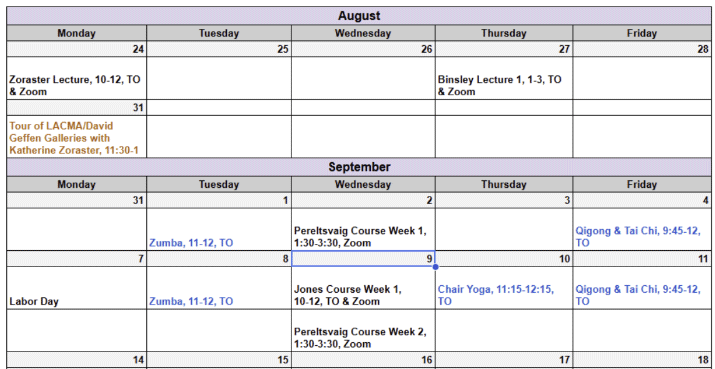
Registration Reminders
Once registered, the confirmation email will come from fab@CalLutheran.edu; make sure to add "fab@CalLutheran.edu" to your address book. If you do not see the FAB email, try checking your junk or spam folders, or your Promotional or Social folders in Gmail. If you don't see the FAB email the morning of your class, please email fab@CalLutheran.edu.
For those courses and lectures where the fee is paid, we will send the Zoom link the morning of each class and lecture. In-Person location and parking details will be sent out one week before the lecture and again the day before.
Payment Options
When submitting your registration, enter your credit card information or your electronic checking information to be processed. Once you have entered all of your payment information, please make certain to click submit on the final page. Your registration will not go through and you will not receive a confirmation email if you do not submit your payment.
Please note that American Express is not accepted.
In-person registration is available. For those that wish to register in-person at our Thousand Oaks campus, please email fab@CalLutheran.edu or call 805-493-3290 to make an appointment to visit our office. Appointments are required and walk-ins will not be accepted. Masks are mandatory when on campus and in campus offices, regardless of vaccination status.
If you have questions regarding registration or payment, please send an email to fab@CalLutheran.edu.
Future Session Dates
TBD